
GTA 6 vs GTA 5 Graphics: The Difference Is Bigger Than You Think
GTA 6 vs GTA 5 graphics - ray tracing, strand-based hair, real-time reflections. Here's the full technical breakdown of how big the leap really is.

GTA 6 vs GTA 5 Graphics: The Difference Is Bigger Than You Think
Thirteen years is a long time in gaming. When GTA 5 launched in September 2013, it was genuinely jaw-dropping — a game that pushed the PlayStation 3 and Xbox 360 to their absolute limits and then somehow looked even better when it arrived on the following generation of hardware. Reviewers used words like "photorealistic" and "indistinguishable from real life," which, in hindsight, tells you more about where we were than where we are now.
Now look at GTA 6.
The comparisons circulating since Rockstar released its trailers and official screenshots aren't just impressive — they're the kind of thing that makes you forget for a moment that you're looking at a video game. And while some of that is marketing, a carefully curated shot designed to make the tech look its absolute best, the honest truth is that the gap between these two games is unlike anything the franchise has seen between entries. This isn't a generational polish job. It's a fundamental reinvention of how the game world is built, lit, and made to feel real.
Here's what actually changed, and why it matters.
The Lighting Is a Different Science Entirely
This is where the conversation has to start, because lighting is what separates a game that looks like a game from a game that looks like somewhere you could actually be.
GTA 5 used pre-baked lighting — shadows and light sources calculated in advance and essentially painted onto the world. It was sophisticated for its time, and in combination with the game's dynamic weather and day-night cycle, it produced a Los Santos that felt genuinely alive. But it had limits that become obvious the moment you put it next to anything using real-time global illumination. Interiors looked flat. Light coming through windows behaved strangely. Characters in certain conditions seemed to glow slightly, floating in the scene rather than existing within it.
GTA 5 — Los Santos at dusk. Pre-baked lighting, flat shadow rendering on surfaces:
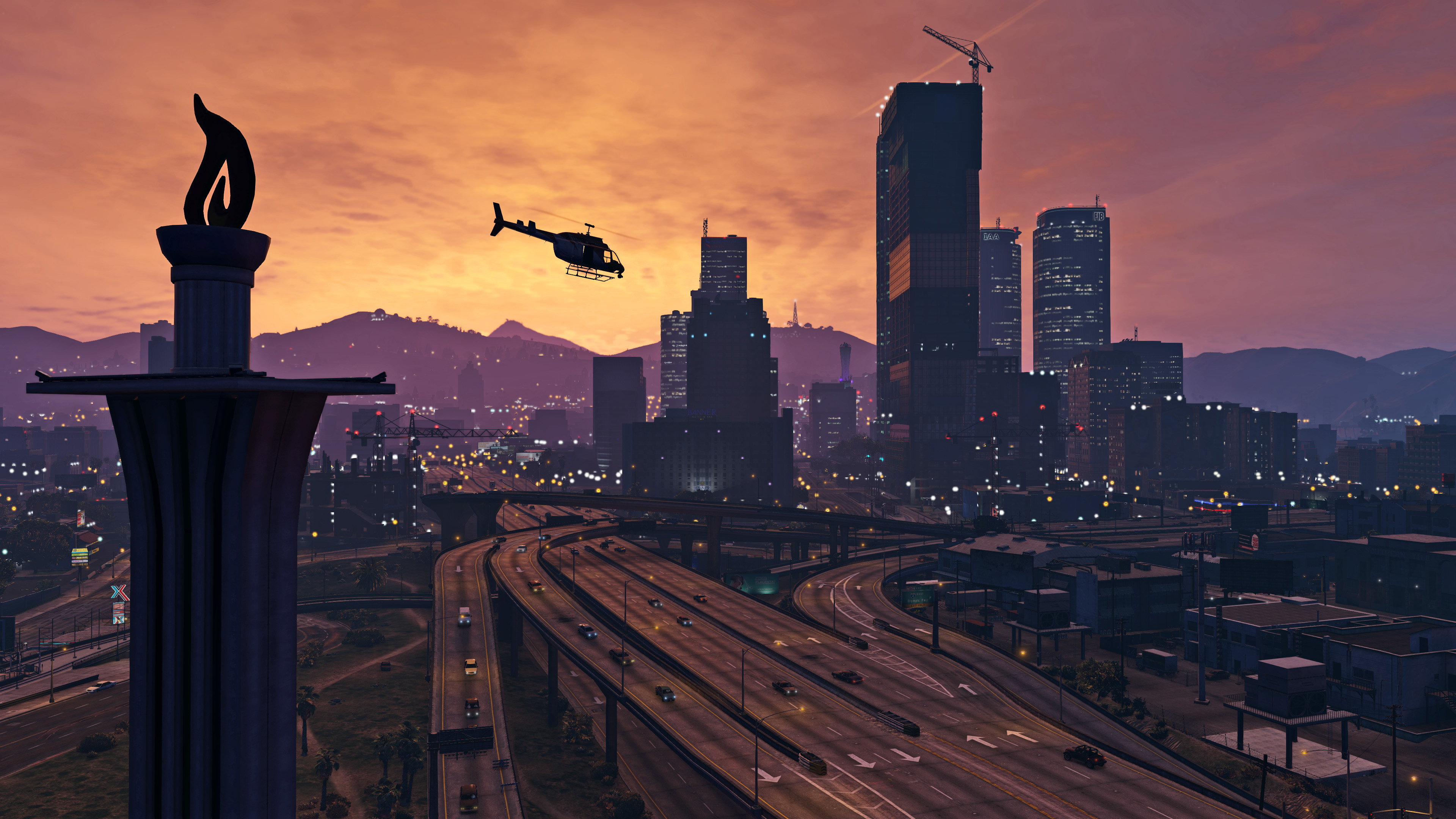
GTA 6 uses ray-traced global illumination — an entirely different way of calculating how light behaves. Rather than painting light onto surfaces in advance, the game simulates how actual light rays travel through an environment, bounce off surfaces, and illuminate things indirectly. Digital Foundry, who broke down both trailers in exhaustive technical detail, described the result as giving "convincing, natural lighting to the game" and noted that the glowing and floating effects typical of standard rasterisation are simply gone.
What that means in practice: a room lit by sunlight coming through a window actually looks like a room lit by sunlight coming through a window. Neon signs on Vice City's streets bounce pink and blue off the wet pavement underneath them. Shadows behave the way shadows actually do — varied and natural depending on the angle and quality of the light source.
GTA 6 — Vice City at night. Real-time ray-traced reflections bouncing off every wet surface:
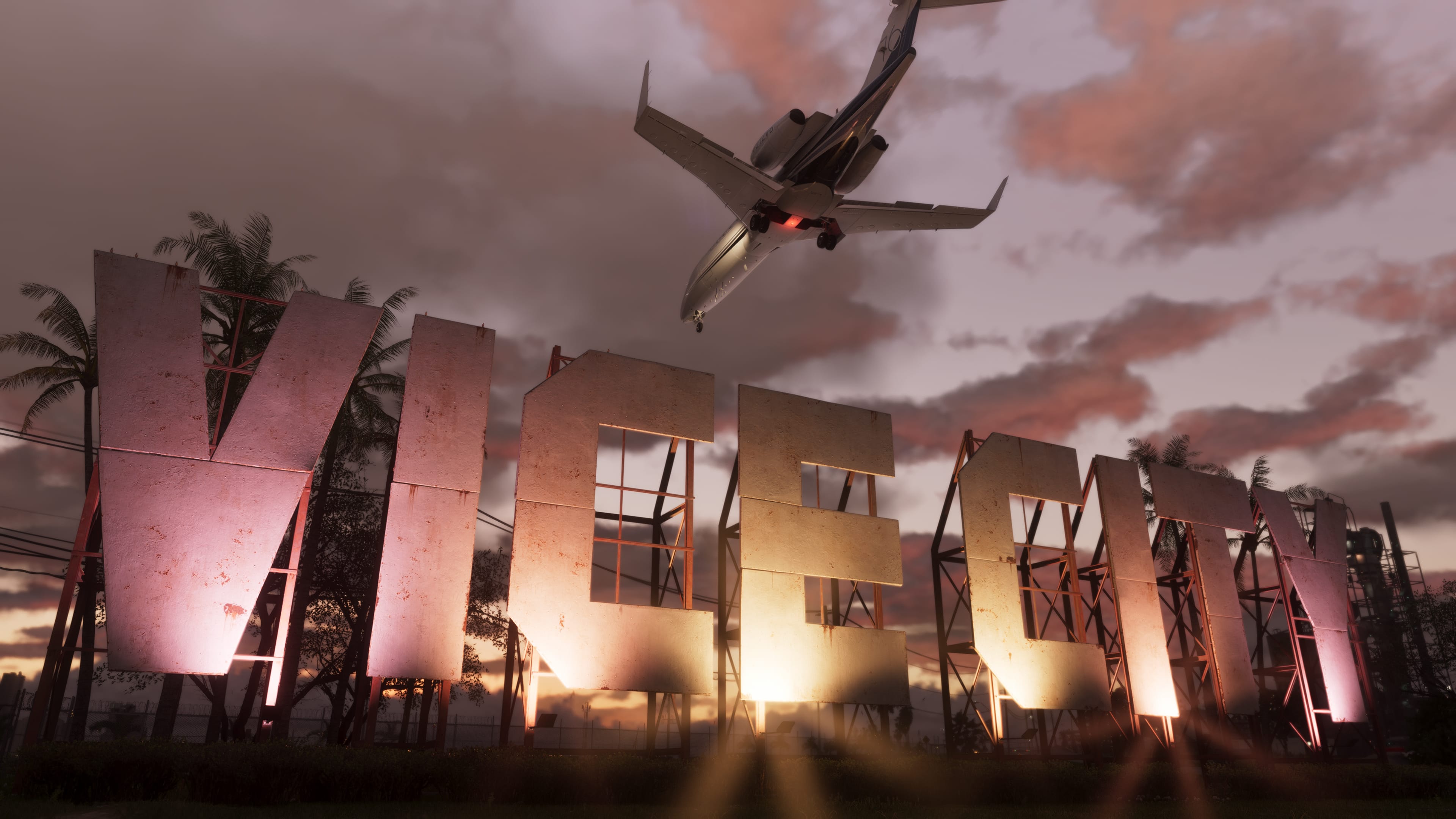
Digital Foundry also confirmed pure hardware ray-tracing on vehicle wing mirrors — showing reflections too dynamic and precise to be a pre-rendered cube map. It sounds like a minor detail. It's the kind of thing your brain registers as real without consciously identifying why.
Character Models: Skin, Hair, and the Uncanny Valley
GTA 5's character models were strong for 2013 — expressive enough to carry the story, diverse enough to populate a city. But they had all the hallmarks of their era: limited facial animation range, hair rendered as solid geometry rather than individual strands, and skin textures that held up fine from a distance but collapsed under scrutiny.
GTA 5 — Michael, official PC screenshot. Note the hair geometry and skin texture limitations of the era:
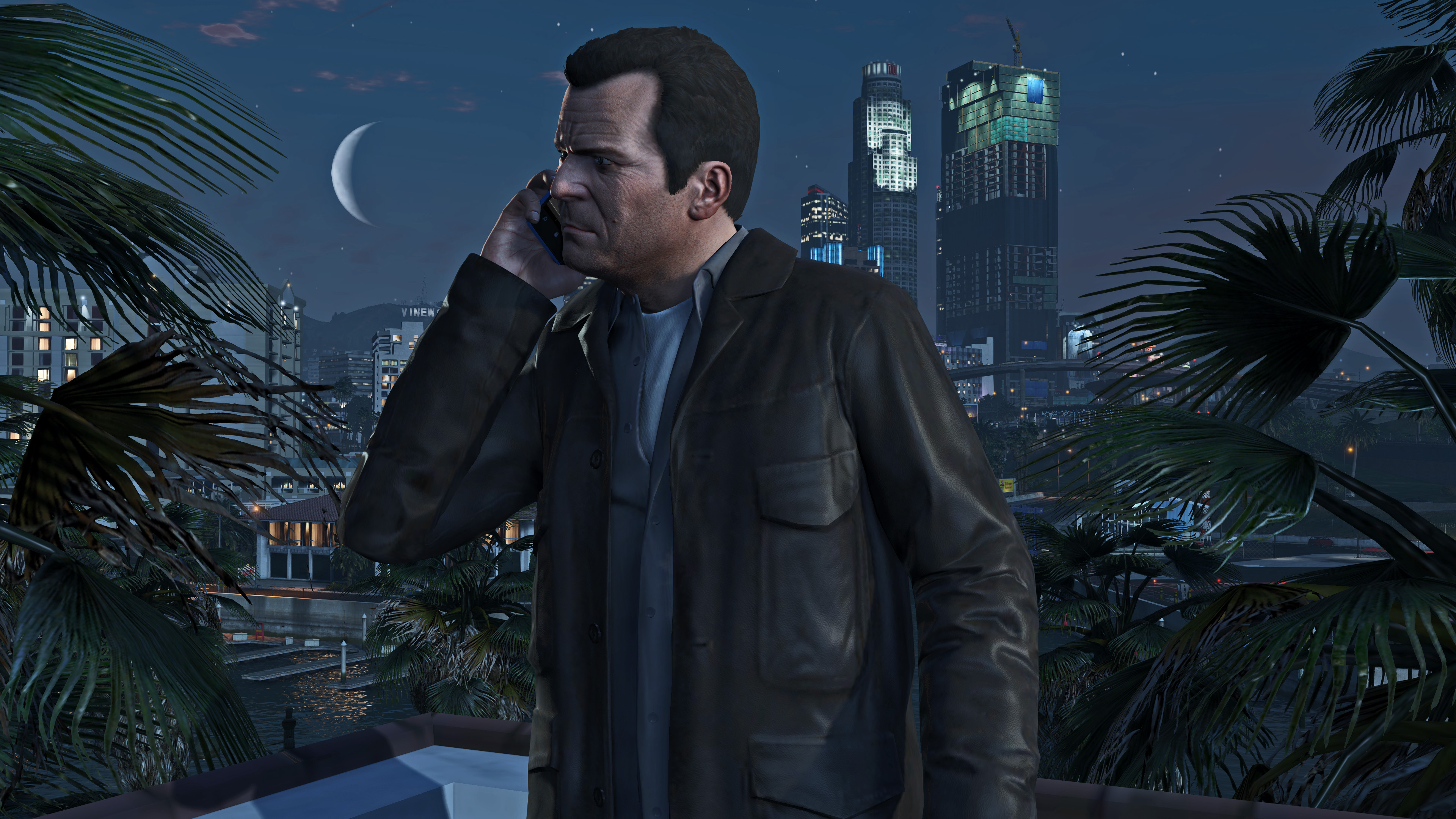
The comparison that sent the internet into a frenzy in 2025 was a side-by-side of Lucia lying by a pool in an official GTA 6 screenshot against a similar GTA 5 composition. The community zeroed in on a single towel — GTA 6's showed individual fibres, a texture density that shouldn't exist at that scale in a video game. The skin rendering, the water surface, the way light interacted with the scene — all drew responses like "I thought this was a real photograph."
GTA 6 — Lucia Caminos, official Rockstar screenshot. Skin rendering, hair physics, and environmental lighting working together:
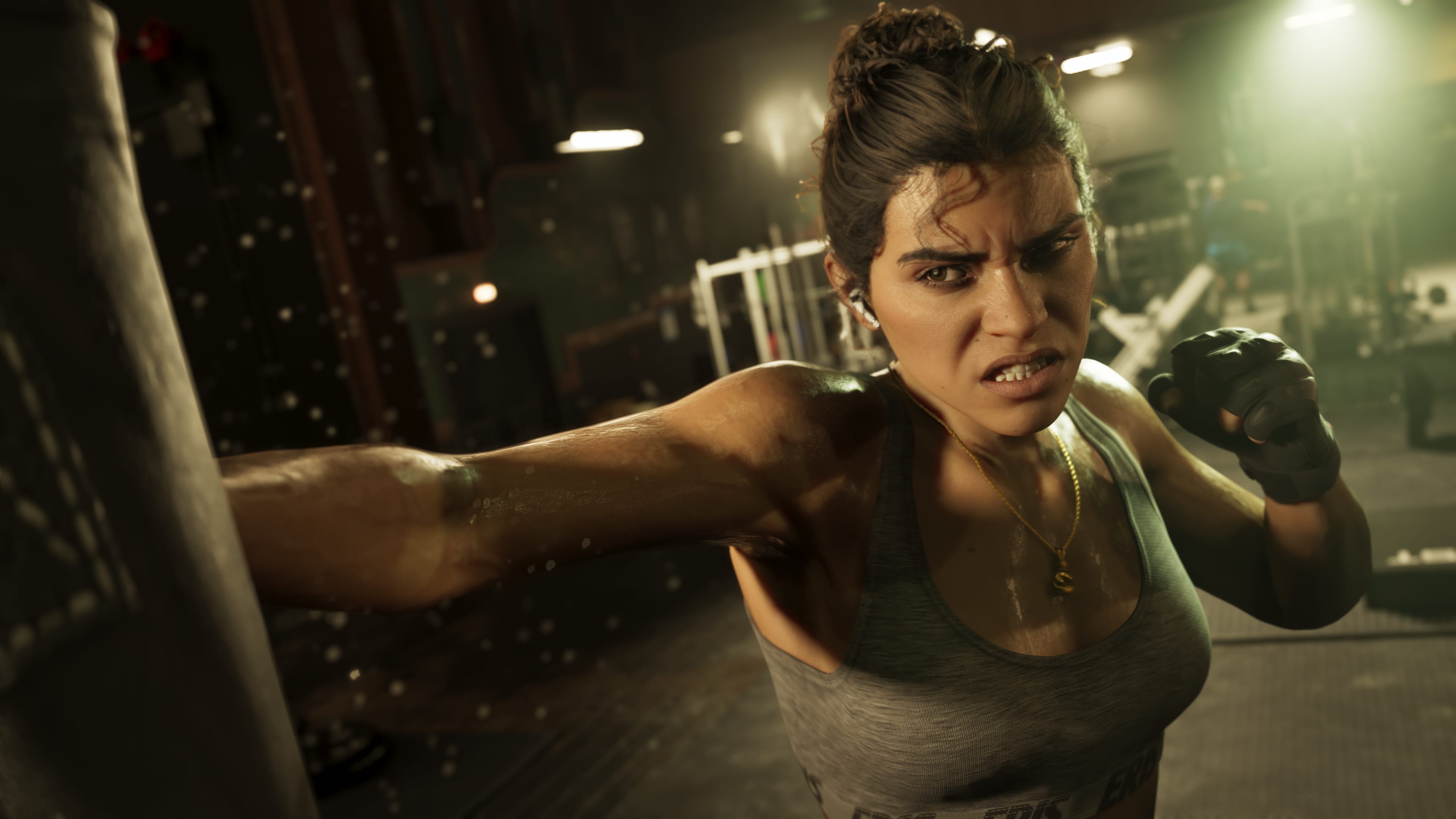
The hair system is instructive on its own. Digital Foundry highlighted a Trailer 2 scene where Lucia's hair flies upward — the strand-level physics, the natural fall and spread of it, was described as "extremely impressive and natural." GTA 5 rendered hair as solid geometry. GTA 6 implements a full hair strand system where every character's hair behaves according to actual physical simulation.
This isn't cosmetic. It's the difference between a character who looks like they exist in the world and one who looks like they were placed into it.
The Open World: Scale, Density, and Environmental Detail
GTA 5's open world was remarkable for its time — Los Santos felt genuinely expansive, and Blaine County gave the game a rural counterpoint that few open-world games had matched. But look closely and the limitations of the hardware it was built for become visible. Vegetation was sparse by modern standards. Distant objects used aggressive LOD pop-in. The countryside, outside specific mission setpieces, felt like a backdrop rather than a place.
GTA 5 — Vinewood Boulevard. Environmental density and lighting quality of the era:
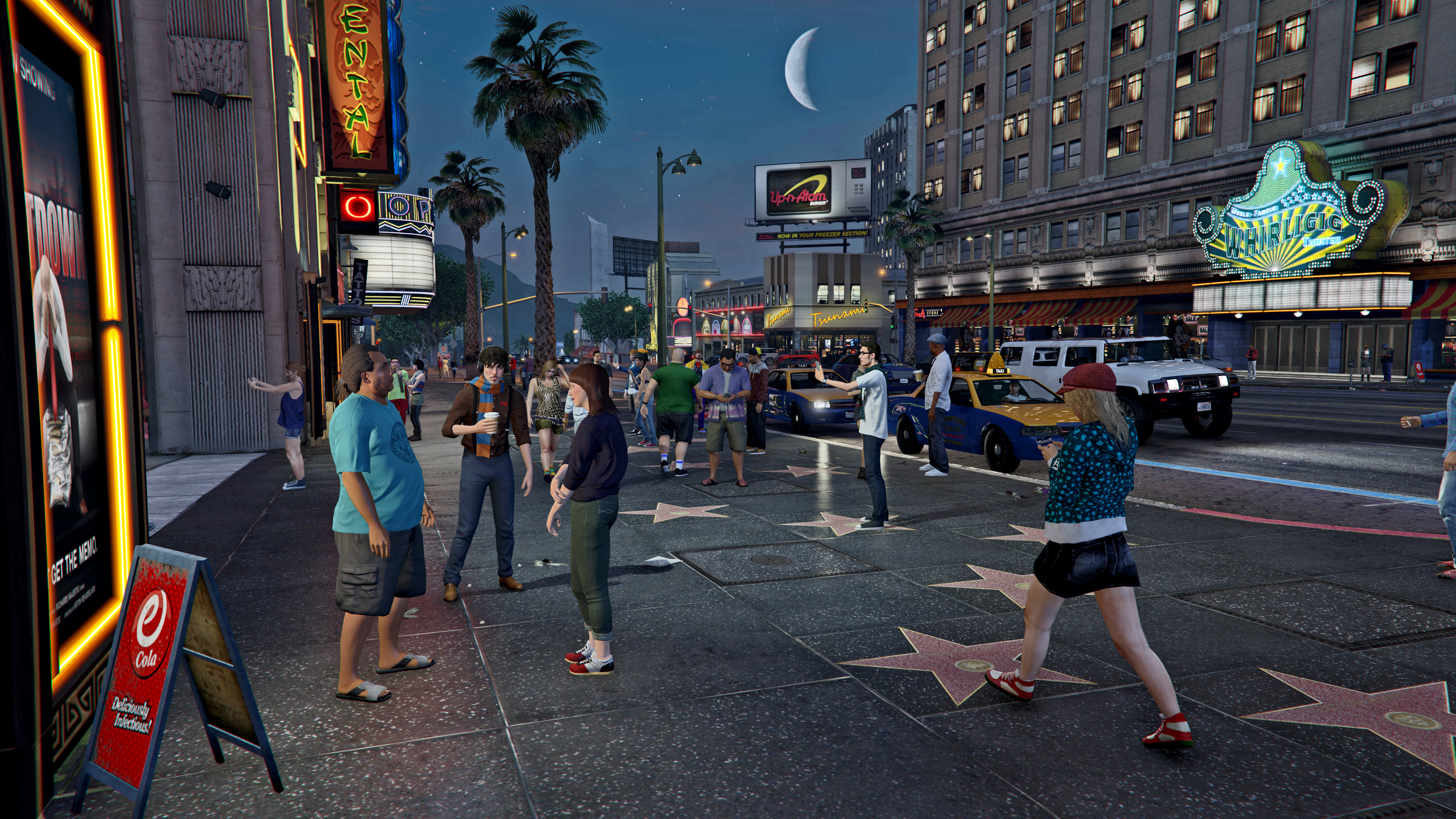
GTA 6's Leonida is built from the ground up for hardware that didn't exist when GTA 5 shipped. The environmental density visible in the trailers and official screenshots is on a different tier entirely. Vegetation reacts to wind, water responds to physics, crowds of NPCs each run their own behavioural schedules.
GTA 6 — The Grassrivers region, official Rockstar screenshot. Environmental density and lighting at a level GTA 5 hardware couldn't approach:
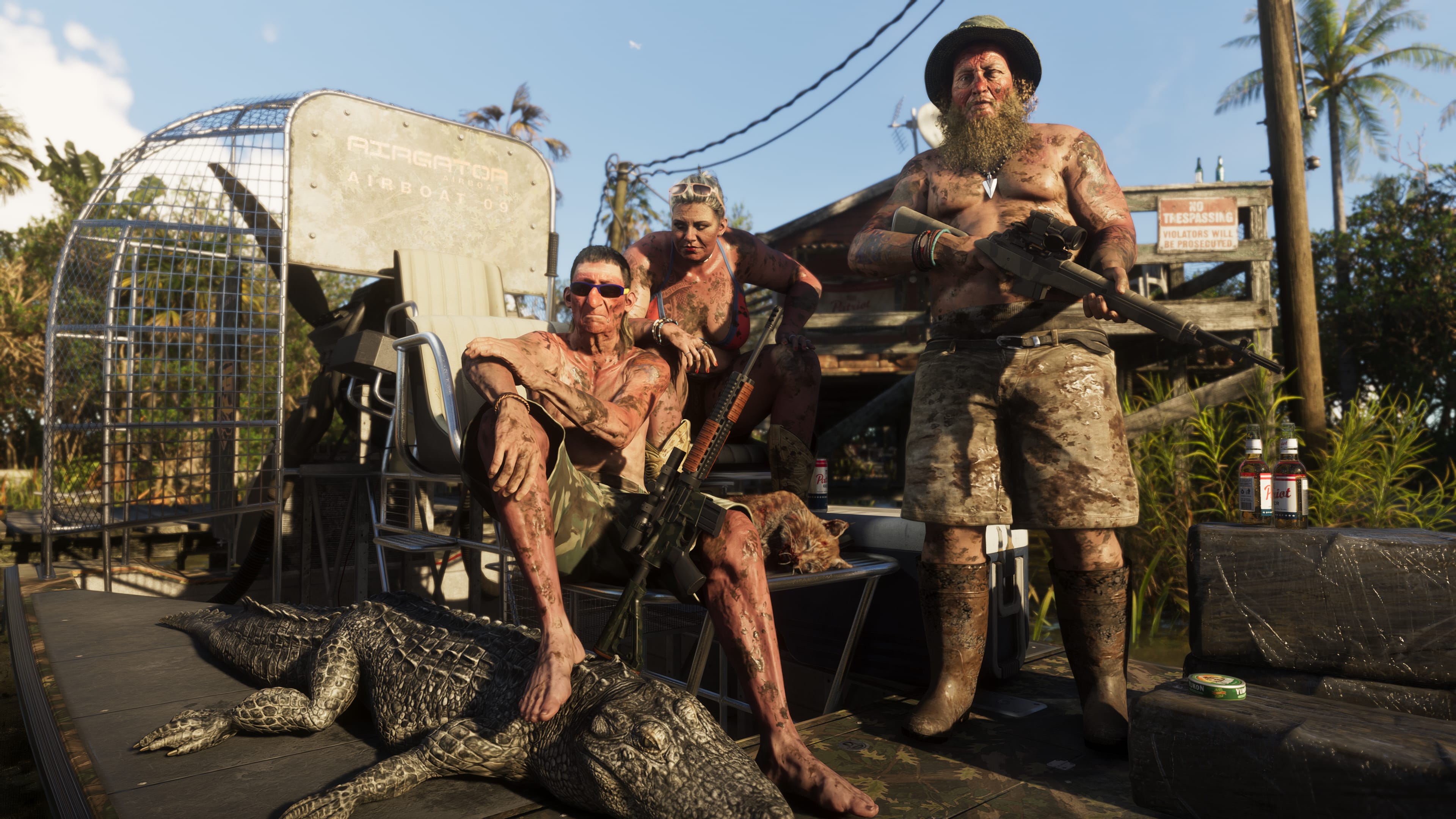
The RAGE 9 engine distributes physics and AI workloads across multiple CPU cores more efficiently than its predecessor, enabling a denser, more reactive world. Volumetric clouds, fog with light passing through it at the correct angles, weather transitions that are gradual and atmospheric rather than sudden and jarring — all of it contributes to a Vice City that doesn't feel like a backdrop.
GTA 6 — Vice City beachfront, official Rockstar screenshot. Water physics, atmospheric lighting, and crowd density visible in a single frame:

The Details the Community Keeps Finding
Some of the most striking comparisons haven't come from professional analysts — they've come from community members with a frame-by-frame eye for detail.
The liquor store comparison became particularly famous. A side-by-side of a convenience store shelf from GTA 5 against the equivalent in GTA 6 was remarkable: GTA 5's bottles were low-resolution assets with no real label detail. GTA 6's shelf was packed with individually rendered bottles with readable labels, realistic glass transparency, and lighting that made several Reddit users genuinely unsure whether they were looking at a screenshot or a real photograph. One comment — "I thought the second one was real life" — was upvoted tens of thousands of times.
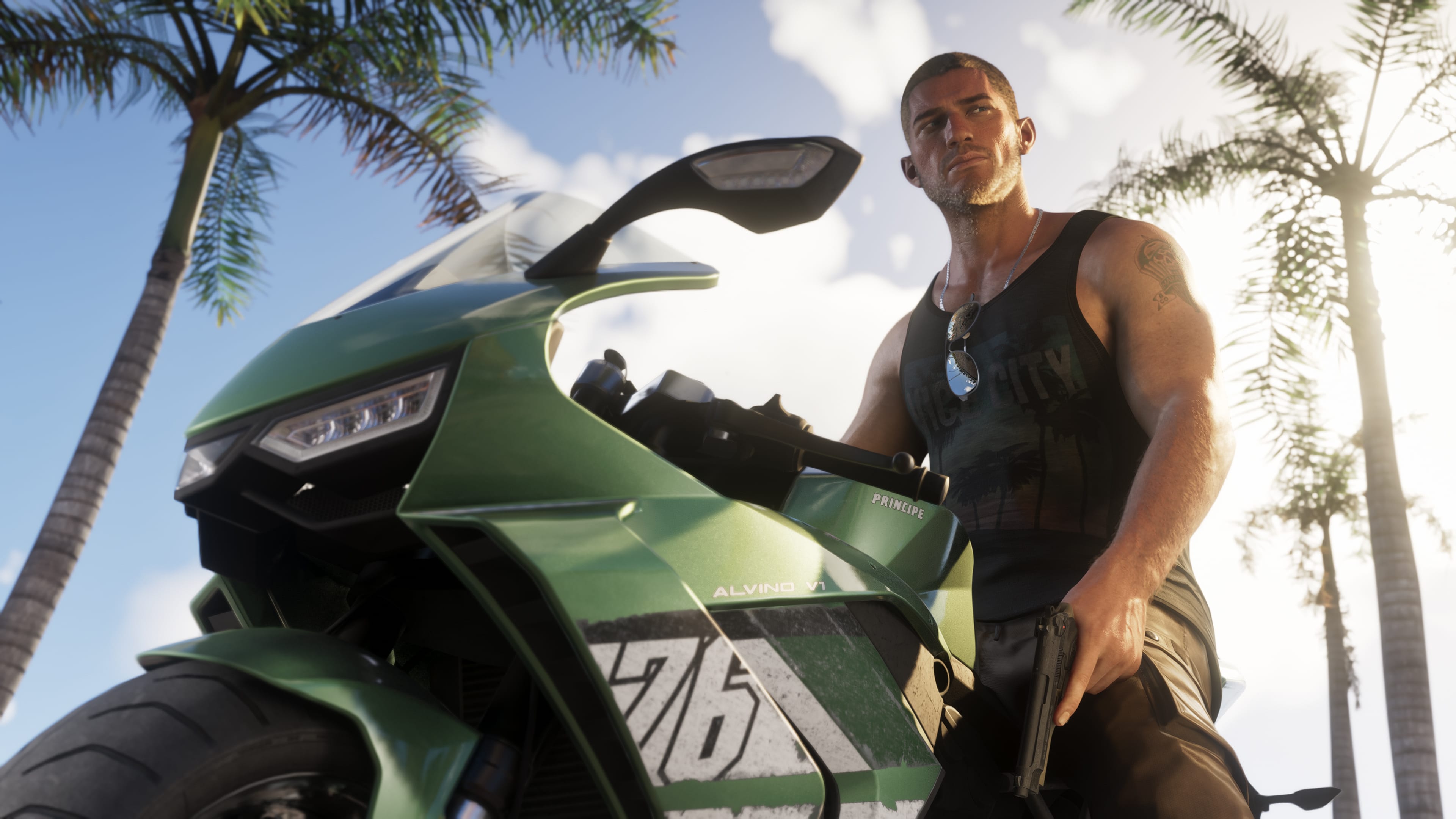
Then there's the vehicle mirror analysis from Trailer 2. A single shot of Jason driving showed ray-traced reflections simultaneously on the front windshield, dashboard mirror, driver-side window, and passenger-side mirror — each reflecting a slightly different angle of the world, all in real time. Multiple forms of ray tracing operating in a single frame. In GTA 5, vehicle mirrors either showed a static pre-rendered image or nothing at all.
GTA 6 — Jason Duval, official Rockstar screenshot. Character rendering and environmental lighting consistent even in a portrait composition:
The Honest Caveat
It would be dishonest to leave this comparison without noting what TheGamer's Stacey Henley pointed out when the pool comparison went viral: this was never a fair fight. The GTA 6 screenshot is an in-engine image curated by Rockstar's own developers — every asset chosen, every angle considered, optimised to show the tech at its most impressive. The GTA 5 comparison was candid gameplay footage of a minor NPC, shot close-up on a texture never intended to be seen that way.
The actual GTA 6, running on your PS5 in November, will not look like those screenshots every second of every session. No game does. The gap will be enormous — genuinely enormous, in ways that will be obvious the moment you boot it up — but there will still be moments where a texture repeats in a way you weren't supposed to notice. That's what games are.
What's clear from everything visible so far is that Rockstar has built something that raises the ceiling of what open-world graphics can be. GTA 5 set the bar in 2013. GTA 6 is not just clearing that bar — it's building a new one entirely.
GTA 6 releases November 19, 2026 for PS5 and Xbox Series X|S. All GTA 6 images are official Rockstar Games screenshots served from rockstargames.com. All GTA 5 images are official Rockstar Games screenshots via igta5.com. Technical observations are based on official trailers and Digital Foundry analysis.
Written by
Erdousky · Founder & EditorLifelong gamer, longtime GTA player, and the sole writer here. Has built a handful of small unpublished games, which is mostly what makes the technical side of Rockstar's work so interesting to write about.
Comments
Be the first to comment.
Related Articles
GTA 6 Trailer 3: The Full Timeline From First Rumors to the Netflix Reveal
From the first "Trailer 3 is imminent" theory in April to the confirmed Netflix premiere on August 27, here is the complete, honest timeline of GTA 6's longest marketing saga, and what actually turned out to be true.
Take-Two Calls GTA 6 Pre-Orders "Unprecedented" in First Q1 Earnings Breakdown
Take-Two just gave its first real financial commentary on GTA 6 pre-orders, and the language was as strong as it gets. Here is everything from today's Q1 earnings call, broken down.
GTA VI: An Extended Look Premieres on Netflix August 27 — Everything Confirmed
Rockstar is skipping its usual channels for GTA 6's next big reveal. Here is everything confirmed about the August 27 Netflix premiere, including times, where else to watch, and what it means for Trailer 3.